




In 1970s Miami, temptation wasn’t just a fantasy—it had an address.
Temptations lived behind guarded gates in Fort Lauderdale estates—vine-covered fortresses where walls were lined with rare automatic weapons and white lions roamed the gardens. It arrived after midnight, wrapped in cash and silence, witnessed only by those meant to see it. It moved through private runways and back channels—unseen but understood.
It lingered in oceanfront penthouses, in rooms where ashtrays overflowed with the residue of excess—and no one asked where the money came from.
Miami had once been alive with energy in the 1940s and ’50s before slipping into a long, quiet sleep.
Then, slowly, it stirred again.
By the late ’60s into the ’70s, the city was waking—reclaiming its edge, its elegance, its appetite. Linen suits returned. So did something harder to name.
Not the postcard version—the real one.
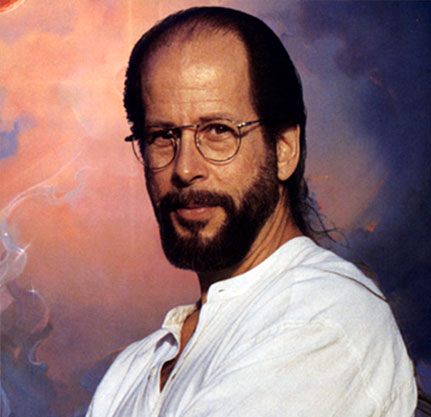
And inside that world, John Pitre didn’t chase it—he moved through it.
Watching. Listening. Trusted.
The Men Who Lived Beyond Consequence
One of the first people to pull John deeper into that world was Kenneth Burnstine—but the introduction didn’t happen the way you might expect.
It started at the dock.
John had noticed the seaplanes tied up along the water—large, expensive aircraft that didn’t seem to be moving much. Curious, he started asking around. Who owned them? What were they used for?
No one really gave him a straight answer.
A few days later, he got a call.
No explanation—just that someone wanted to meet.
A car showed up to pick him up. The driver didn’t say much. They drove through the city and eventually pulled up to a set of massive gates in Fort Lauderdale. At the entrance, a sign warned that trespassers would be eaten.
It didn’t feel like a joke.
The gates opened, and the car rolled onto the property.
Inside, the estate revealed itself—magnificent, expansive, and meticulously controlled. White cars lined the drive. The architecture was clean and striking, with a kind of quiet power to it. Everything felt intentional, curated, and just slightly beyond what most people would ever experience.
The car came to a stop.
And then Ken walked out.
That was the first real introduction.
He was flamboyant, handsome, and carried himself with a presence that immediately shifted the energy around him. Dressed in a tailored white suit, he looked like a slightly older version of James Bond—not the polished version on screen, but the one you imagined existed behind it. His face had the kind of lines that only come from experience—sharp, earned, and unmistakable.
He was polite. Calm. Controlled.
But there was no question. You didn’t want to disappoint him.
John began to pitch his idea—seaplanes, scuba tours, and flights between Palm Beach and the Bahamas. Something real. Something structured, legitimate, profitable.
He didn’t get very far.
Ken cut him off, stepped forward, and slipped a check into his pocket.
“I like it,” he said.
That was it.
The driver reappeared almost immediately and took John back home.
When John finally looked at the check, he realized it was for a substantial amount.
That was the confirmation.
It was a go.
So he went all in.
He printed brochures. Distributed them to tour groups up and down the East Coast. Built out the concept like it was a real operation. And for a moment, it worked—the phone started ringing. People were interested. Customers wanted to book.
But something was missing.
The planes weren’t flying.
The logistics weren’t coming together.
And the more legitimate the demand became, the more the operation didn’t make sense.
Concerned, John managed to arrange another meeting with Ken. This time, he was direct. He had real people, real customers, real expectations—and he needed clarity.
Ken listened.
Then, just as calmly as before, he reached into his pocket and slipped John another check.
“Just keep doing what you’re doing.”
No urgency. No concern—just quiet certainty.
If customers needed refunds, give them their money back—book them something else if you had to. Ken was generous like that.
John left that meeting with more questions than answers.
And then, one night, he saw it.
The planes were gone.
Not during the day. Not on any schedule anyone had discussed.
Before dawn.
Quietly.
That’s when it clicked.
It was never really about the business.
It was about trust.
And once that trust was established, the doors opened.
Private parties. Private flights. Private worlds.
John found himself at gatherings where ashtrays were filled with cocaine and gold straws sat beside crystal glasses. The atmosphere felt elevated, surreal, and strangely normal all at once.
At one of those parties, after indulging a little too much, John wandered the property trying to clear his head. The house stretched farther than it first appeared, and at some point, without thinking much about it, he passed through a gate and into the gardens.
It was quiet there.
Too quiet.
Then a voice cut through the night.
“Pitre—don’t move.”
It came over a loudspeaker, calm and unmistakable.
Ken.
“Slowly start walking backwards.”
John started to follow the instruction, but instinct—and maybe a little disorientation—took over. He turned forward instead.
That’s when he felt it.
Weight. Movement. Claws.
One of the lion cubs had leapt onto his back like an oversized house cat, playing, but not gently. His shirt tore. Skin broke. It was quick, chaotic, and strangely surreal—like everything else in that world.
By the time he made it back, scratched and bleeding, the room had shifted just enough to notice.
Ken looked at him, took it in, and smiled.
John asked for a change of clothes.
“No,” Ken said calmly. “You’re staying like that.”
He let the moment sit for a beat, then added:
“Let it remind people not to go into the garden.”
And just like that, the night moved on.
That was Miami.
Beautiful. Controlled. A little dangerous.
And if you were paying attention, it told you everything you needed to know.
Even the signs were real. Beautiful things could still bite.
The City That Inspired the Myth
Before Hollywood turned it into legend, Miami was already living it.
The men moving through John’s world were the prototypes for stories that would later become mythology—Cuban operators, Colombian money, pilots flying unscheduled routes through the night, and women who dressed like royalty and carried themselves with the same kind of authority.
Some names were spoken quietly.
Some were never spoken at all.
By then, John had leased a stunning estate of his own—marble columns, ceilings rising nearly twenty feet high, and a massive carriage-house garage large enough to hold eight cars. It was the kind of place where every room felt like a movie set and every night came with its own story.
Men like Ken, “Jim,” and powerful investors were buying John’s surrealist paintings the way others bought watches or cars. They had money that felt almost detached from reality and were drawn to things that seemed rare, symbolic, and impossible to ignore.
Right next door lived a young Cuban man who seemed to represent everything Miami had become—handsome, mysterious, and surrounded by a kind of quiet power no one ever explained.
Expensive cars came and went at strange hours. Visitors arrived quietly and left even quieter. No one asked questions.
He carried himself with the confidence of someone who didn’t need to be introduced.
And in unexpected ways, he was generous—sending gardeners to maintain not just his estate but the surrounding properties as well, as if the entire neighborhood were his.
When Oliver Stone and Brian De Palma were nearby absorbing the atmosphere that would eventually shape the movie Scarface, men like him were already living those roles.
The polished, magnetic Cuban portrayed on screen didn’t feel like fiction to John.
He had already seen the real version next door.
Everyone understood the rules without saying them out loud.
Miami was already writing its own screenplay.
And John was painting inside it.
Painting Temptations
Temptations was not imagined from a distance.
It was painted from life.
John called the very people living inside that world and asked them to come pose.
They did.
There were many figures in the composition—drawn directly from the people around him. Individuals who were part of that scene and comfortable in it. They showed up, got high, lounged around, and became part of the painting without hesitation.
Among them was John Giordano—an enforcer with presence, discipline, and intelligence whose life would later take a different direction. After stepping away, he went on to build rehabilitation centers, turning experience into something redemptive.
The woman suspended inside the glowing capsule was modeled after one of the women from that world—beautiful, fearless, and entirely comfortable with chaos. But she was only one of many.
The painting drew from a larger circle. Friends, wives, girlfriends, enforcers, and familiar faces from Miami’s private world came through the house, and many of them stepped naturally into the work. No one needed much direction. They already understood the energy, the tension, the allure of it all. They were living it.
Some were there out of curiosity, some because they liked the idea of being part of something lasting, and others simply because it felt like another extension of the life they were already leading.
John didn’t need to invent characters.
He just had to paint what was already in front of him.
By then, John was pretty friendly with the neighbor next door—he’d been invited to a few of his lavish parties and had gotten to know him in his private life as easygoing and genuinely friendly. One day, after running into him, John said he should swing by, mentioning he had something he might want to see.
He stopped by later that day, came in, and took a look at what John was working on.
“So you’re doing a painting?” he said.
John asked if he wanted to be part of it.
He smiled, almost amused. “No,” he said. “I can’t be in the limelight.”
Then, almost as an afterthought, he mentioned he had a little gift for them. He reached into his pocket and placed a substantial amount onto the artist’s palette, as casually as someone might set down a bottle of wine. He stayed for a few minutes, said very little, and then slipped back out.
That kind of moment didn’t stand out—it belonged.
Even upstairs, life continued in parallel. John had leased part of the home to a single tenant—a Southern belle with white Great Danes, perfect presentation, and the ability to pay six months of rent in cash without hesitation.
One night, during a party, her dogs knocked into a tray and sent its contents across the white carpet.
No one panicked.
The moment dissolved into laughter, improvisation, and people on their hands and knees turning it into something between a game and a ritual.
And John kept painting.
The Painting Too Dangerous for the Cover
Originally, Temptations was commissioned for one of the most infamous rock bands of the era—a group whose appetite for excess was nearly as legendary as their music.
The vision was simple: the painting would be the album cover.
And the band loved it.
They understood exactly what it was—a reflection of the world they were living in. Raw. Seductive. Beautiful. Dangerous.
But the record label saw something else.
When the finished painting arrived, it was rejected.
Maybe it was too provocative. Maybe it revealed too much. Maybe the truth inside it made people uncomfortable.
Because Temptations was never subtle.
It was more than surrealism—it was a mirror.
A paradise of surreal, exotic, forbidden forms drawn from a euphoric world—glowing shapes, exposed innocence, and indulgent pleasures. Beauty and poison lived side by side. Desire and consequence shared the same canvas.
People recognized themselves in that painting.
And that was exactly what made it so dangerous.
It wasn’t meant for one collector’s wall—it was meant for mass distribution. Album covers. Vinyl sleeves. Posters traveling around the world.
And not everyone wanted that kind of reflection printed millions of times.
The Collector Who Understood It
Soon after, Temptations found the kind of collector it was always destined for—not a rock star, but someone whose world made the painting feel less like fantasy and more like autobiography.
Its reputation traveled quietly through circles where wealth moved in silence and ownership was rarely public. Within those circles, a story began to follow the painting—one that would become part of its legend—that it had, at one point, found its way into the hands of Pablo Escobar.
For a painting like Temptations, it almost felt inevitable.
A world of excess, seduction, danger, and power captured on canvas—recognized by someone who had lived all of it at the highest level. Whether confirmed outright or passed quietly between collectors, the story became inseparable from the artwork itself. In those rooms, the painting wasn’t viewed as surrealism.
It was viewed as recognition.
That is what gave Temptations its mythology.
It became more than a canvas. It became a story people told—part object, part legend, part evidence of an era when Miami was writing its own mythology in real time.
There have even been whispers recently that the original still exists somewhere in Colombia, held quietly in a private collection—the kind of place a painting like this would naturally disappear into. If true, it only deepens the story. Like many of Pitre’s most significant works, Temptations remains part of living history, surfacing only through fragments, memories, and conversations among those who were close enough to understand it.
For the right collector or investor, we welcome acquisition inquiries. Owning Temptations is not simply purchasing a painting—it is stepping into one of the most fascinating and complex chapters of modern cultural history.
Its influence, however, extends far beyond the original.
As one of John Pitre’s most recognized and provocative images, Temptations became a widely collected poster, finding its way into homes, studios, and private collections around the world. Today, collectors can experience the work through museum-quality archival canvas editions and exclusive digital formats, allowing a new generation to connect with the art in their own way.
Because great art does not disappear.
It evolves, it travels, and it waits for the next person who sees themselves inside it.