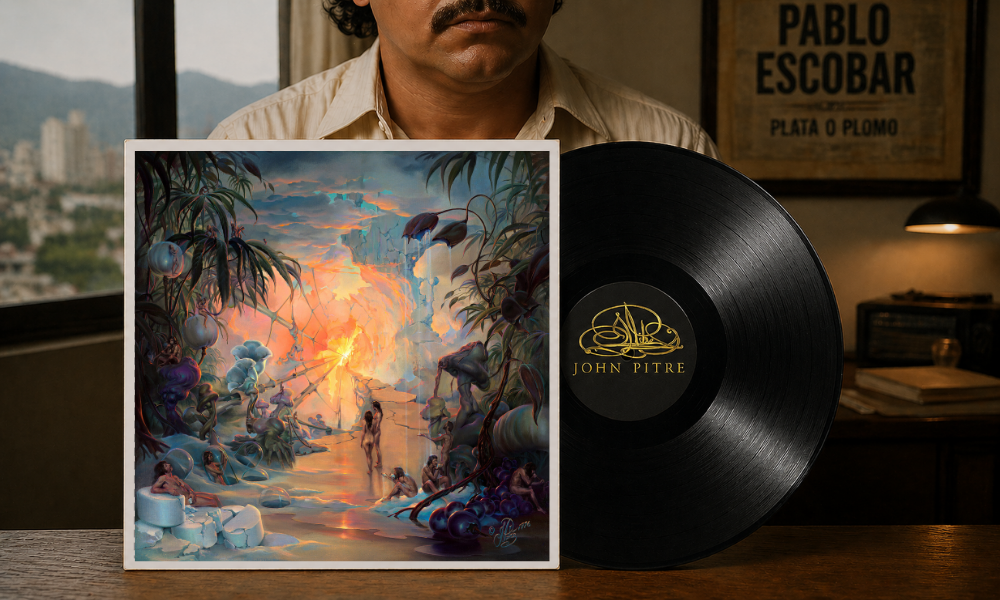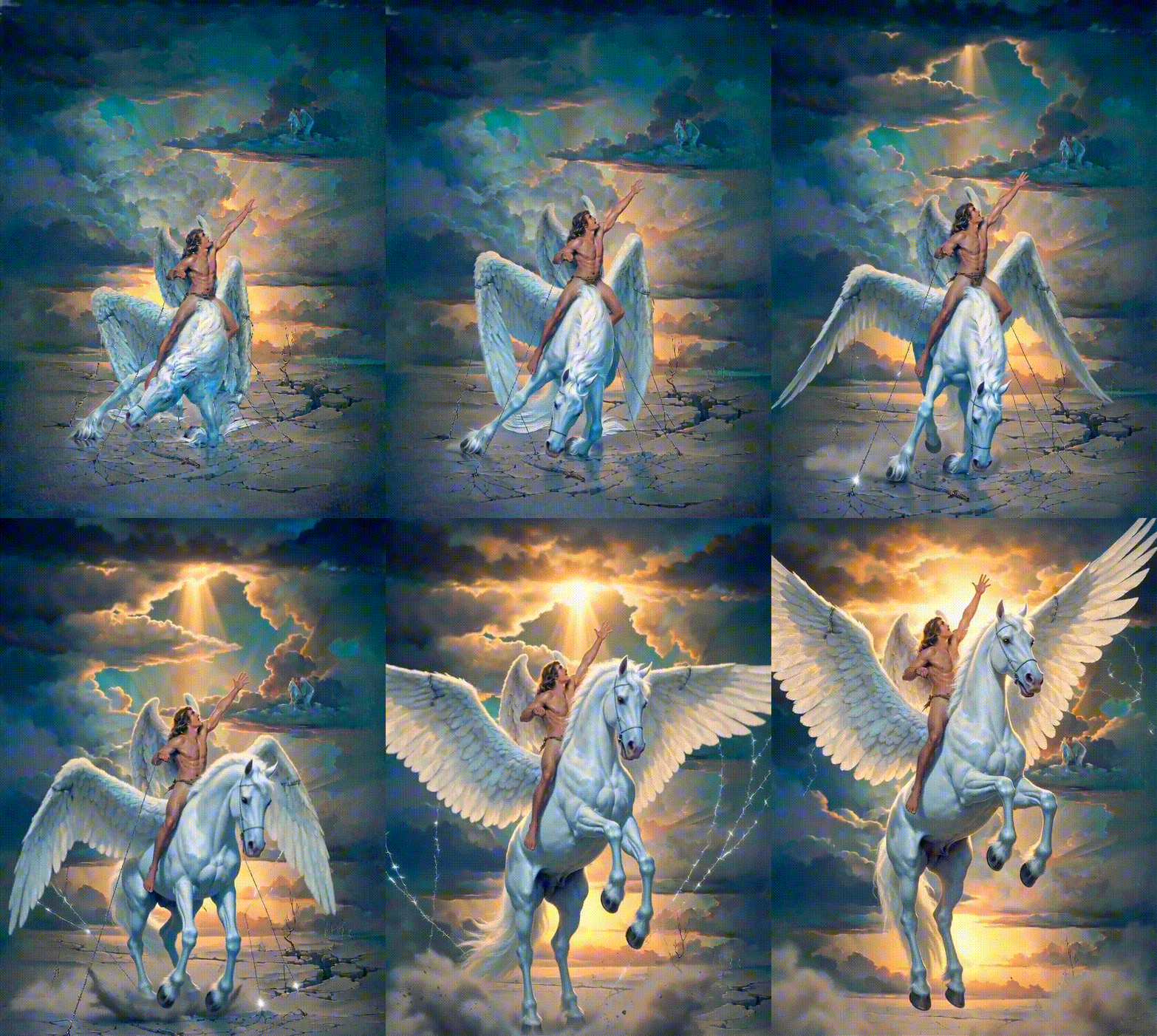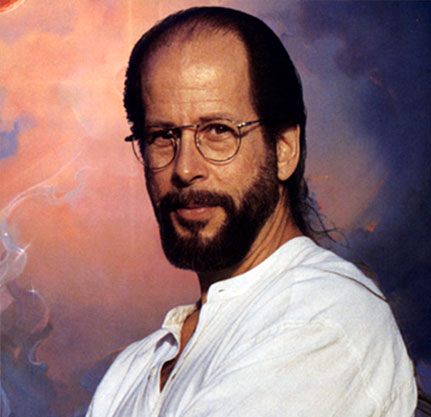

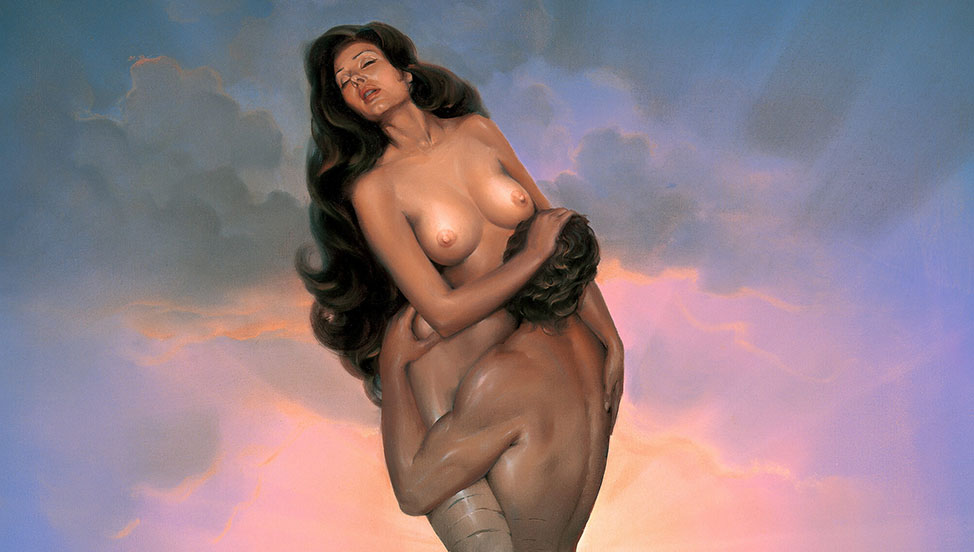
 John Pitre didn’t expect to see his work like that.
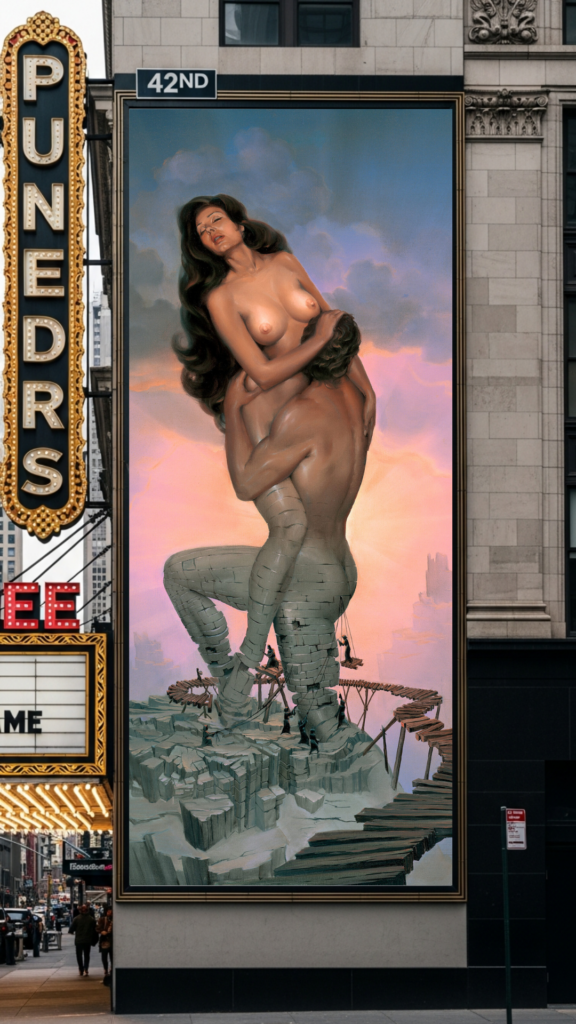
He had just arrived in New York, invited into a world few artists ever glimpse—a world of gangsters, powerful businessmen, and the men behind some of the largest money moving through America. As he was driven through the city, the car slowed along 42nd Street. The energy was exactly what you’d imagine—loud, quick, and a little chaotic.
Then he looked up.
There it was.
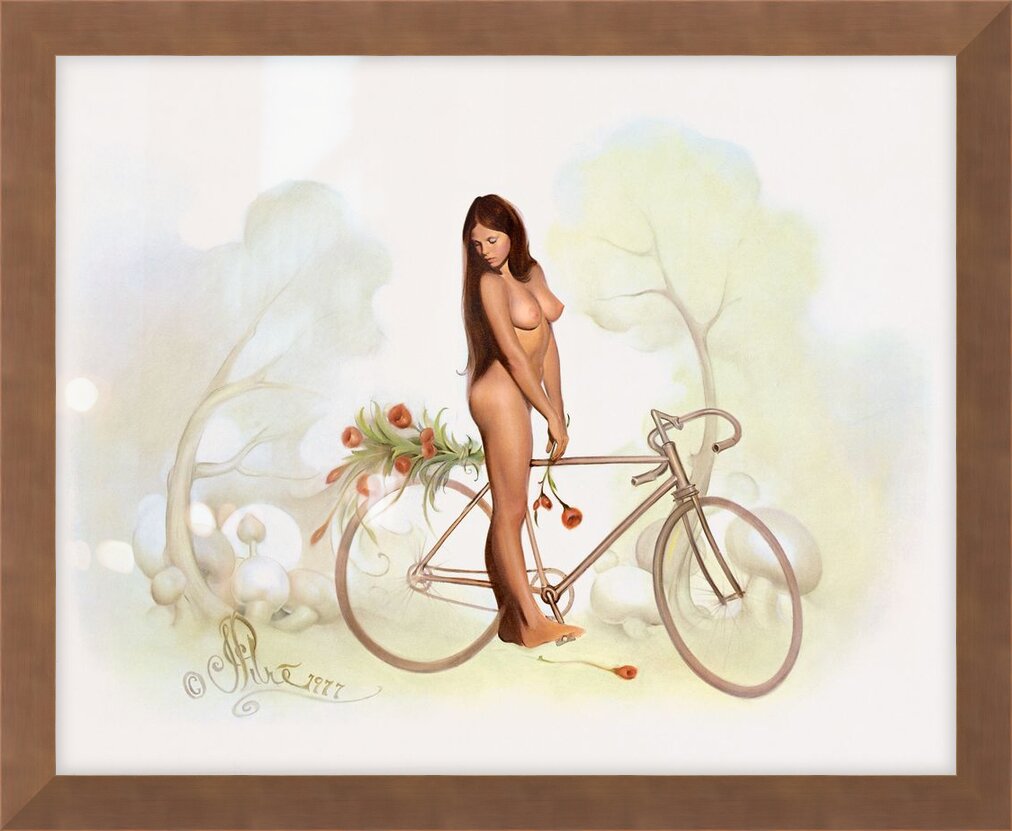
Passion.
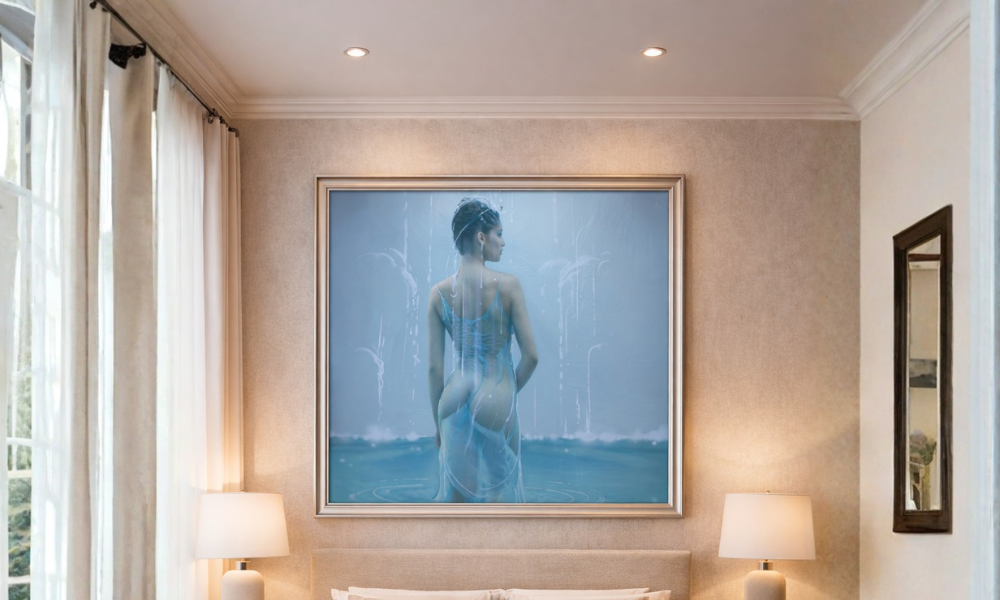
Two stories high, stretched across the front of an adult movie theater.
Not in a gallery. Not framed. It was just blown up and placed right in the middle of the city.
For a second, it didn’t even register. Then it hit him—that was his painting.
His first thought was simple—how could something this sensual be displayed so openly, right there in public, towering over one of the busiest streets in New York?
The answer was power.
The people behind those theaters controlled far more than entertainment. They had influence over the city, over the police, and over the systems that decided what stayed and what disappeared. If they wanted a painting on the front of a building, it stayed there.
He started to react, but the woman next to him leaned in and quietly told him to stay silent. This wasn’t the kind of situation where you asked too many questions.
Because this didn’t happen by accident.
He had been introduced through one of South Florida’s most infamous larger-than-life figures—an arms dealer, smuggler, entrepreneur, and collector whose name carried weight in every room he entered. Through him, John found himself connected to the circles surrounding Jimmy Hoffa, the Teamsters Union, and the hidden financial engine behind some of the biggest investments in the country.
They understood scale. They understood influence. And they understood exactly how to place something where it would be seen.
Including art.
What Pitre stepped into wasn’t the traditional art world. It was something faster, bigger, and far more strategic.
The meetings felt straight out of a film—smoke-filled offices, lawyers, expensive gifts casually offered from desk drawers and back rooms, and conversations that moved quickly from art to power. They visited elite publishing houses filled with original Norman Rockwells and printing operations funded by people who understood that value could be created as much as it could be discovered.
Then came Sotheby’s.
At first, it felt like a front-row seat to how the high-end market worked. But once the bidding started, it became clear the experience was more than observation.
The room had a rhythm to it. Bids came in quickly, then faster. What started as interest turned into competition, and competition turned into momentum. People who may not have planned to bid were suddenly pulled in.
Prices climbed.
The energy fed itself.
John realized they weren’t simply attending the auction—they were helping drive it. Carefully placed bidders and serious money were pushing Norman Rockwell originals higher and higher. Paintings once purchased for only a few thousand dollars were suddenly selling for well over six figures.
The room had completely shifted their values.
And while Passion was never part of that auction, it belonged to the same strange world—where art, money, influence, and illusion all moved together.
From a studio to a theater marquee on 42nd Street, the painting had taken on a life far beyond the canvas.
But what made it powerful wasn’t where it showed up.
It was that it held its meaning regardless of where it went.
Because Passion has never been about context.
It’s about that moment when you commit to something fully—knowing there’s pressure, knowing there’s risk, and doing it anyway.
And that’s exactly what the painting had done.